What a Green Card Medical Exam Doctor Checks During Your Exam
January 22, 2026
So, you’re on the journey to getting your green card in Larchmont, and now you’ve reached the “medical exam” part. If you’re picturing a cold, impersonal checkup, take a deep breath—you’re not alone. Think of it more like a full health snapshot designed to protect both you and the community. This exam ensures you don’t have contagious diseases, missing vaccinations, or other conditions that might delay your application.
In this guide, we’ll walk you through exactly what a green card medical exam doctor checks and how to prepare so the process feels smooth and stress-free.

Why Your Green Card Medical Exam Matters
Many applicants underestimate the medical exam because they think it’s just paperwork—but it’s much more than that. USCIS requires this exam to ensure everyone entering the U.S. meets health standards, preventing public health issues like outbreaks of measles or tuberculosis.
Think of it like a safety checkpoint at the airport: it might feel tedious, but it’s designed to catch potential risks before they escalate. Passing this exam is also essential for your green card approval timeline. Missing vaccinations or incomplete lab results can delay your application for months, which is why preparation matters.
Who Performs Your Green Card Medical Exam?
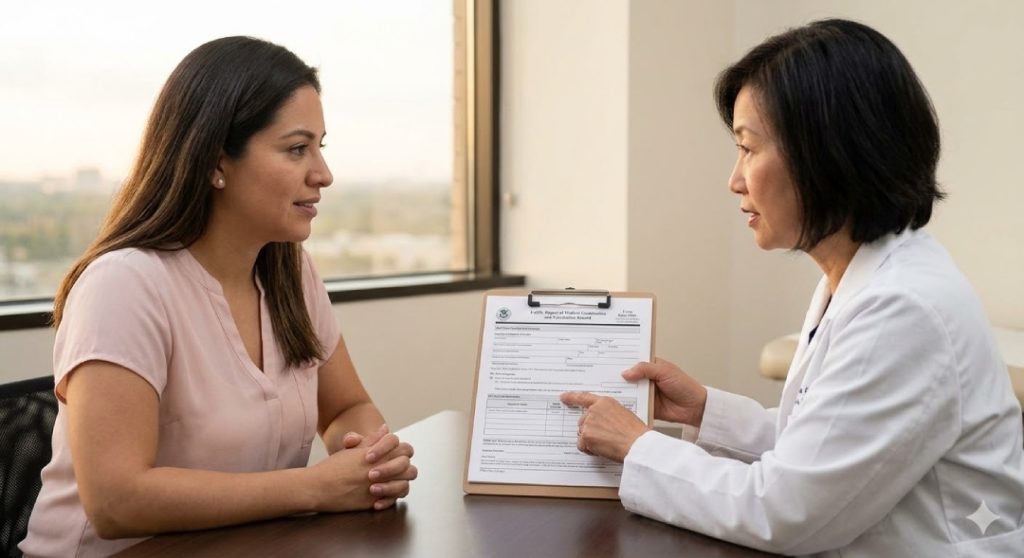
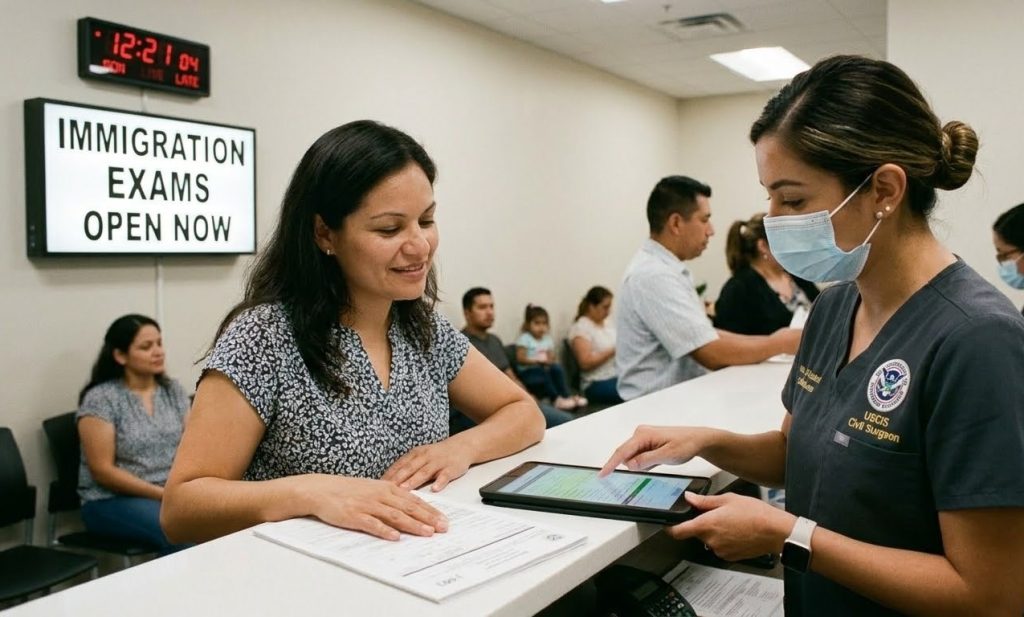
Not every doctor can sign off on your green card medical exam. USCIS only authorizes specific doctors—known as civil surgeons in the U.S.—to perform this exam. These doctors are trained to understand exactly what USCIS expects and will ensure your results meet federal standards.
Role of a USCIS-Approved Doctor
A USCIS-approved doctor is like a licensed guide through the medical maze of your green card application. They are responsible for:
- Reviewing your complete medical history.
- Administering required vaccinations.
- Conducting lab tests and screenings.
- Completing Form I-693 accurately for USCIS submission.
Without a doctor who’s certified, your medical exam could be invalid, causing unnecessary delays.
Choosing the Right Clinic in Larchmont
Local convenience matters—but so does experience. A clinic like Immigration Medical Exam Clinic in Larchmont can save you a lot of hassle. Their team knows the process inside out, can guide first-time applicants, and ensures that paperwork and vaccinations are handled correctly.
Choosing a trusted clinic can mean the difference between a stressful visit and a smooth, quick experience.
Step 1: Review of Your Medical History
Before any tests or vaccines, your doctor will spend time reviewing your health history. Think of this as laying the foundation of a house: if the base isn’t solid, everything else can falter.
Previous Illnesses and Vaccination Records
Bring a complete record of vaccinations, previous illnesses, and hospitalizations. Missing vaccines, like MMR (measles, mumps, rubella), or chickenpox history can trigger catch-up vaccinations. Think of it as checking a “health checklist” to ensure you’re fully covered and compliant.
Medications and Allergies Check
Your doctor will need a detailed list of any medications or supplements you take. This helps avoid complications with vaccines or tests. Allergies, especially to vaccines or antibiotics, are critical to note, preventing serious reactions.
Step 2: Physical Examination
After reviewing your history, your doctor will perform a physical exam. This is like a mechanic inspecting a car before a long road trip—they check all systems to make sure everything functions as it should.
General Health Assessment
Your doctor will assess your general appearance: weight, height, body mass index (BMI), and overall physical condition. Fatigue, nutrition, and signs of chronic illness may also be noted. This gives a snapshot of your overall wellness and helps identify areas needing follow-up care.
Checking Vital Signs
Vital signs are the heartbeat of your exam. Blood pressure, pulse, temperature, and breathing rate are all checked. These measurements can reveal hidden issues, such as hypertension or respiratory problems, that may require further investigation.
Examination of Specific Systems (Heart, Lungs, etc.)
Your doctor will systematically check each major system:
Heart and Lungs
Listening for irregularities or signs of chronic disease.
Abdomen
Checking organs and digestion-related issues.
Skin
Looking for rashes, lesions, or infectious signs.
Eyes and Ears
Basic checks for clarity and function.
This isn’t meant to scare you—think of it as a safety net catching potential problems before they affect your long-term health.
Step 3: Vaccination Review and Updates
Vaccinations are a cornerstone of your green card medical exam. USCIS requires you to be protected against diseases that could pose public health risks.
Required Vaccines for Green Card Applicants
Commonly required vaccines include:
- MMR (measles, mumps, rubella)
- Polio
- Tdap (tetanus, diphtheria, pertussis)
- Influenza
- Hepatitis B
- Varicella (chickenpox)
Missing any of these can delay your application, but don’t worry—your doctor will administer catch-up doses safely.
Catch-Up Vaccinations for Adults
Some adults may have missed childhood vaccinations. Your doctor will create a catch-up schedule, administering vaccines in a sequence that ensures effectiveness. Think of it as patching gaps in your immune system armor.
Step 4: Laboratory Tests and Screenings
Next comes lab testing. These screenings help detect conditions that could affect public health or your eligibility.
TB Test (Tuberculosis Screening)
Most applicants undergo a TB skin test or blood test. If results are positive, a chest X-ray is performed to check for active TB. This step ensures you aren’t carrying a contagious disease that could spread in your community.
Syphilis and Other STI Screening
Blood tests are required to detect syphilis. Depending on age or medical history, other sexually transmitted infections may also be screened. Think of it as a preventive check that ensures public safety and your long-term health.
Other Required Blood Tests
Depending on your age and overall health, your doctor might check for hepatitis B, anemia, or other blood-related conditions. These tests provide a holistic picture of your health.

Step 5: Mental Health Assessment
This is not a full psychiatric evaluation. Instead, your doctor checks for conditions that might pose a public safety risk. Questions could include past hospitalizations or treatment for severe mental disorders.
Evaluating Behavioral or Psychiatric Conditions
Doctors assess whether behavioral or psychiatric conditions could endanger the applicant or others. This step ensures safety while being respectful of privacy and dignity.
Step 6: Medical Documentation and Certification
Once the examination is complete, your doctor fills out Form I-693. This is the official document USCIS needs to approve your green card application.
Filling Out Form I-693
The doctor documents your medical history, vaccinations, lab results, and physical exam findings. Accuracy is essential—errors can lead to delays or re-examination.
Submitting Results to USCIS
Some clinics submit the form directly; others give it to you to include with your application. Always confirm submission instructions to avoid delays.
Common Questions During the Exam
Your doctor may ask about:
- Travel history
- Recent symptoms like fever, cough, or fatigue
- Medications, allergies, and vaccines
Being prepared and honest ensures the process is smooth.
Tips for a Smooth Green Card Medical Exam in Larchmont
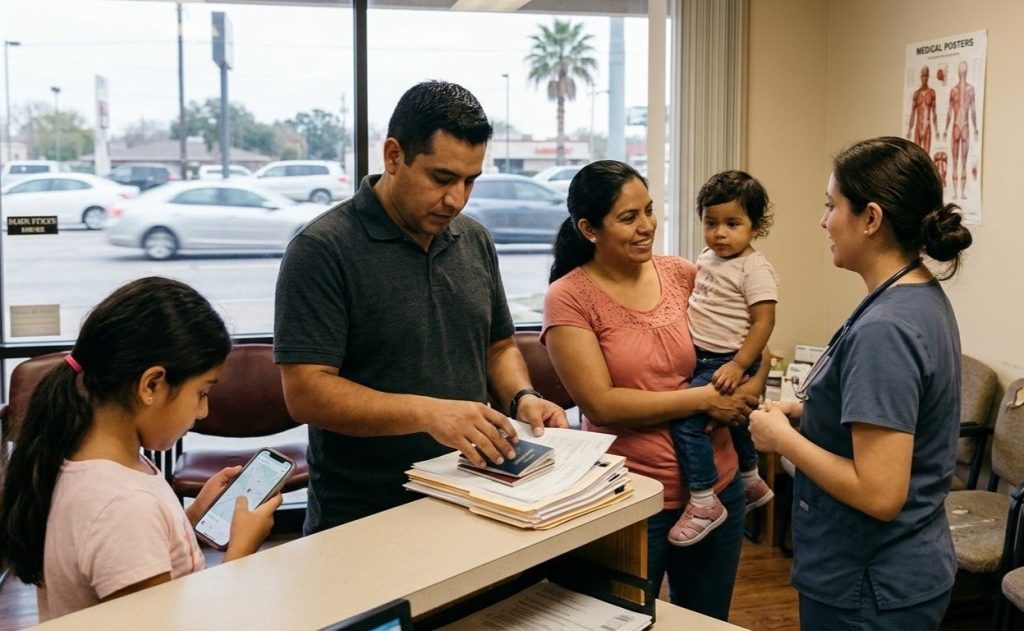
- Bring ID and vaccination records.
- Wear comfortable clothing for the physical exam.
- Eat lightly and stay hydrated.
- Answer questions truthfully.
- Choose a trusted clinic like Immigration Medical Exam Clinic in Larchmont to guide you.
Immigration Medical Exam Clinic: Trusted Choice in Larchmont
The Immigration Medical Exam Clinic in Larchmont specializes in green card exams. Their staff is professional, knowledgeable, and compassionate. They help applicants navigate paperwork, vaccinations, and screenings efficiently, ensuring your exam goes as smoothly as possible.
Immigration Medical Exam Clinic Serving the Larchmont Community and Beyond in Houston
Immigration Medical Exam Clinic is dedicated to serving the diverse needs of the local community of Houston, including individuals residing in neighborhoods like Larchmont. With its convenient location near landmarks such as the Houston City College and major intersections like Westpark Dr and Royalton St (coordinates: 29.725695704071445, -95.4730979687273), we offer green card medical exam doctor Houston services.
Get Green Card Medical Exam Doctor Services at Larchmont Now
Call Us Now
Navigate from Larchmont to Immigration Medical Exam Clinic Now
Passing Your Green Card Medical Exam Successfully
The green card medical exam doesn’t have to be intimidating. By understanding each step—medical history, physical exam, vaccines, lab tests, and mental health assessment—you can go in prepared and confident.
Choosing a trusted clinic in Larchmont like Immigration Medical Exam Clinic ensures the process is efficient, accurate, and stress-free. With preparation and guidance, passing your green card medical exam is straightforward.
FAQs
Q1: How long does a green card medical exam take?
Typically 30–60 minutes, depending on labs, vaccines, and paperwork.
Q2: Can children and adults have the same exam requirements?
Requirements differ slightly. Children often need additional vaccines and screenings.
Q3: What if I have a medical condition?
The doctor will document it and advise if treatment is needed before clearance.
Q4: Are results confidential?
Yes, results are only shared with you and USCIS.
Q5: How often do I need a green card medical exam?
Once per green card application, unless USCIS requests an updated exam.