What Vaccines Are Required For I 693 Medical Exam
February 15, 2026
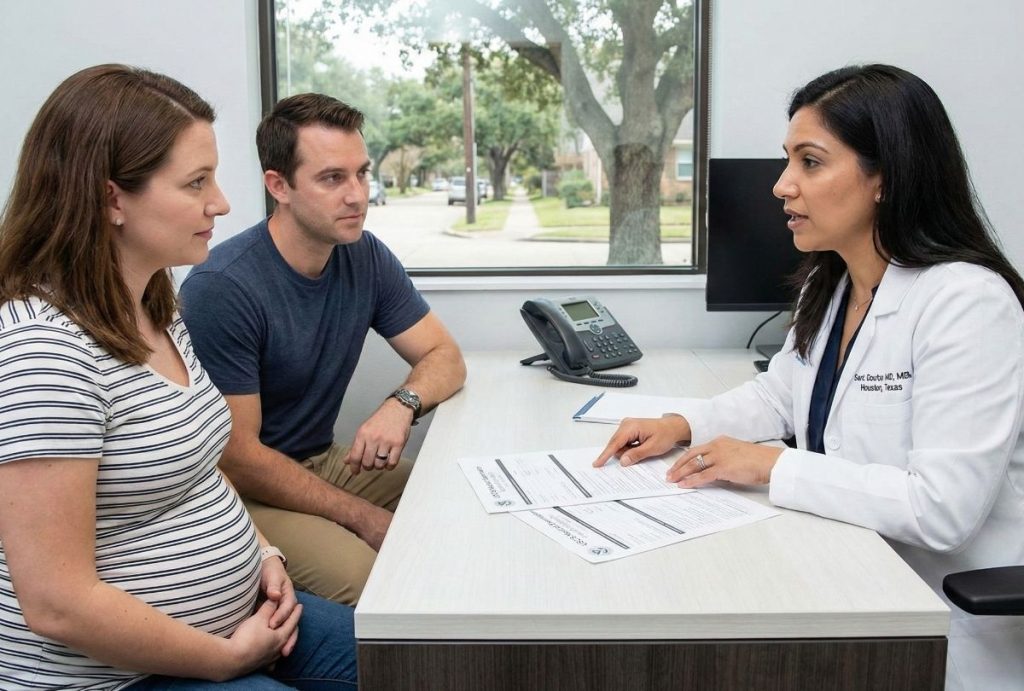
Navigating the I-693 medical exam can feel overwhelming, especially if you’re unsure which vaccines are required. Whether you’re a first-time applicant or updating your immigration records, understanding vaccine requirements is essential to avoid delays in your U.S. immigration process.
This article walks you through every detail, from core vaccines to special cases, preparation tips, and choosing a reliable clinic in Houston.
Understanding the I-693 Medical Exam
The I-693 medical exam is a key step in your immigration journey. It serves as official documentation that a licensed civil surgeon has reviewed your health and vaccination history.
Essentially, the exam ensures you meet the health standards set by U.S. Citizenship and Immigration Services (USCIS). Completing this form correctly is not just a formality, it protects public health and confirms your medical eligibility to adjust your status.
Purpose of the I-693 Form
The I-693 form acts as proof that your medical examination complies with U.S. immigration health standards. USCIS reviews the form to ensure applicants are free from communicable diseases and have received the required immunizations. Without a properly completed I-693, your green card or status adjustment application could face delays or even rejection.
Who Needs the I-693 Exam
Most applicants for adjustment of status need the I-693 exam. This includes children, adults, and anyone whose previous medical forms have expired. Some applicants may be exempt, such as certain refugees or individuals with specific medical conditions, but the vast majority will be required to submit a completed I-693 form.
Role of Vaccines in the I-693 Exam
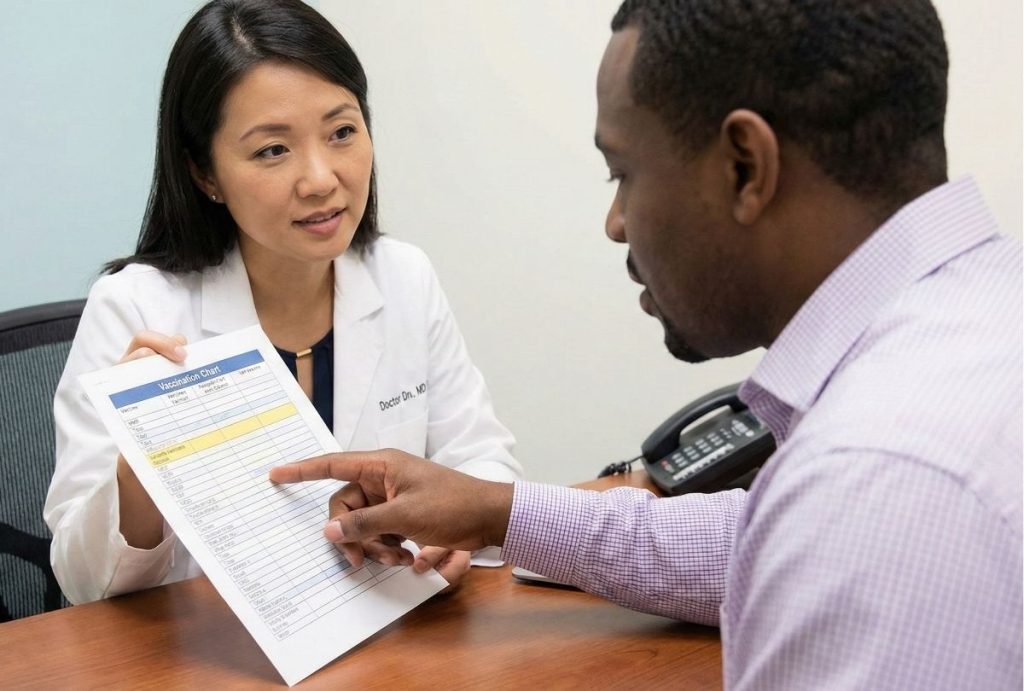
Vaccines are a critical component of the I-693 medical exam. They protect both the individual and the community from potentially serious diseases. USCIS relies on vaccination records to ensure public safety and prevent outbreaks, which is why missing or incomplete vaccinations can cause delays in your application process.
Why Vaccinations Matter for Immigration
Vaccinations are not just bureaucratic requirements, they safeguard communities. By completing required vaccines, you reduce the risk of spreading illnesses like measles or polio. For immigration authorities, compliance with vaccine guidelines signals responsibility and readiness to integrate safely into the community.
How Vaccine Requirements Are Determined
The Centers for Disease Control and Prevention (CDC) sets the standards for which vaccines are required. These guidelines are periodically updated to reflect public health needs. Your civil surgeon reviews your vaccination history and compares it against CDC recommendations, ensuring that your immunizations meet current U.S. requirements for the I-693 form.
Core Vaccines Required for I-693
Certain vaccines are considered essential for the I-693 exam. These vaccines cover highly contagious or dangerous diseases and help prevent outbreaks. The most common vaccines include MMR, Tdap, Varicella, Polio, Hepatitis B, Influenza, and COVID-19.
MMR (Measles, Mumps, Rubella)
MMR protects against three viral diseases: measles, mumps, and rubella. Typically, two doses are required unless immunity is confirmed through lab tests. For children, the first dose is given at 12–15 months, and the second at 4–6 years.
Adults who missed their doses in childhood may need catch-up vaccinations. Measles and rubella can cause serious complications, especially in pregnant women and immunocompromised individuals, making this vaccine a priority.
Tdap (Tetanus, Diphtheria, Pertussis)
Tdap protects against tetanus, diphtheria, and pertussis (whooping cough). Adults generally receive a booster every ten years. For pregnant women, Tdap is recommended during each pregnancy to protect the newborn. If your vaccination history is unclear, your civil surgeon may recommend a booster to meet I-693 requirements.
Varicella (Chickenpox)
Varicella vaccination protects against chickenpox. If you’ve never had chickenpox or the vaccine, the exam typically requires two doses. Blood tests can confirm immunity and prevent unnecessary shots. Varicella is highly contagious, so completing this vaccination is essential for both children and adults without prior exposure.
Influenza
The flu vaccine is required seasonally for certain applicants, particularly children, the elderly, and those with underlying medical conditions. The medical examiner may request proof of the most recent flu vaccination, especially if the exam occurs during flu season.
Polio
Polio vaccination protects against a highly contagious virus that can cause paralysis. Depending on your age and previous immunization history, you may need one or more doses. Adults with incomplete polio records often follow a catch-up schedule recommended by the civil surgeon.
Hepatitis B
Hepatitis B is a liver infection transmitted through blood and bodily fluids. The vaccine series typically involves three shots over six months. Applicants with incomplete or missing vaccination records will need to start or continue the series before the I-693 exam can be finalized.
COVID-19 Vaccine Requirements
Recent updates include COVID-19 vaccination as part of public health compliance. USCIS generally requires proof of vaccination or documented medical or religious exemption. The requirement ensures immigrants align with U.S. health guidelines.
Special Cases and Age-Specific Vaccines
Vaccines aren’t one-size-fits-all. Age, medical history, and prior immunizations influence which vaccines are required during the I-693 exam.
Vaccines for Children
Children typically need MMR, Varicella, Polio, Hepatitis B, and Tdap at specific ages. Civil surgeons follow CDC schedules to ensure children meet U.S. standards. Timing is critical, some doses need spacing of weeks or months, so planning ahead is important.
Vaccines for Adults
Adults may require booster doses of Tdap, MMR, Varicella, or Hepatitis B. Age-appropriate vaccines like influenza and COVID-19 are also included. Catch-up schedules are common, especially for immigrants who missed childhood vaccinations or moved from countries with different vaccine standards.
How to Prepare for Your Vaccination Requirements
Preparation is key to a smooth I-693 medical exam. Understanding your vaccination history, scheduling missing doses, and knowing the timelines can save time and reduce stress.
Gathering Previous Medical Records
Collect your vaccination records from schools, clinics, or previous doctors. Accurate records prevent unnecessary repeat shots and make your exam faster.
Catch-Up Vaccinations
If you’re missing doses, the civil surgeon will create a personalized catch-up schedule. This ensures all vaccines are administered according to CDC guidelines without unnecessary delays.
Common Barriers and How to Overcome Them
Fear of needles, missing records, or medical conditions can complicate the process. Open communication with your doctor is essential. Clinics can help with alternative schedules, exemptions, or documentation to ensure you meet requirements without stress.
Choosing the Right Immigration Medical Exam Clinic in Gulfton
Selecting a qualified clinic ensures accurate vaccine verification, proper exam documentation, and timely completion of your I-693 form.
Why the Right Clinic Matters
Licensed civil surgeons minimize errors that could delay your USCIS application. Mistakes on vaccination records or exam forms can create unnecessary setbacks, so choosing a trusted clinic is crucial.
Services Offered by Immigration Medical Exam Clinic
Immigration Medical Exam Clinic in Houston provides comprehensive I-693 services. They offer physical exams, lab testing, vaccination verification, catch-up shots, and proper completion of the I-693 form. Their expertise guarantees compliance with USCIS requirements, giving you peace of mind.
After the Vaccinations: Completing Form I-693
Once your vaccines are verified, the civil surgeon completes the I-693 form. This step documents your medical eligibility and ensures all health and vaccination standards are met.
What Happens During the Exam
The exam includes a review of your medical and vaccination history, a physical assessment, and screenings for communicable diseases. Doctors may administer vaccines and provide guidance for missing doses.
Submitting Your Completed Form
After the exam, your civil surgeon will seal the I-693 form. USCIS requires the original sealed form, opening it yourself invalidates the submission. Submit it with your adjustment of status application for processing.
Tips for a Smooth I-693 Medical Exam
Proper planning and preparation make the process straightforward. Keep records ready, ask your doctor questions, and schedule your exam with enough time for any required vaccines.
Scheduling and Timing Considerations
Some vaccines require multiple doses spaced weeks apart. Plan your I-693 exam in advance to allow enough time for catch-up doses. Early scheduling prevents expiration of completed exams and ensures your form remains valid for submission.
Questions to Ask Your Doctor
Ask about vaccine schedules, exemptions, potential side effects, and how to document your immunizations properly. Understanding these details ensures your I-693 form is completed correctly and reduces delays.
Immigration Medical Exam Clinic Serving the Gulfton Community and Beyond in Houston
Immigration Medical Exam Clinic is dedicated to serving the diverse needs of the local community of Houston, including individuals residing in neighborhoods like Gulfton. With its convenient location near landmarks such as the Sylvan R. Rodriguez, Jr. Elementary School and major intersections like Renwick Dr & Gulfton St (coordinates: 29.71670369714994, -95.48345486219654), we offer i 693 medical exam doctor Houston services.
Get I-693 Medical Exam Doctor Services at Gulfton Now
Navigate from Gulfton to Immigration Medical Exam Clinic Now
Ensuring a Seamless I-693 Medical Exam Through Vaccination Compliance
Completing the required vaccines for your I-693 medical exam is essential for a smooth immigration process. Proper preparation, understanding vaccine requirements, and choosing a trusted clinic in Houston, like Immigration Medical Exam Clinic, ensures your form meets USCIS standards and protects public health.
By staying organized and informed, you can move through your medical exam confidently and avoid unnecessary delays.
FAQs
1. Can I use vaccines received in another country?
Yes, as long as official documentation exists and the vaccines meet CDC standards. Blood tests may confirm immunity if records are unclear.
2. What if I have a medical exemption from a vaccine?
Your civil surgeon can document exemptions on the I-693 form. USCIS may request supporting medical evidence.
3. Are children required to have all vaccines for I-693?
Children must follow CDC age-appropriate schedules, which include MMR, Varicella, Polio, Hepatitis B, and Tdap.
4. How do I know which vaccines I need?
Your civil surgeon reviews your medical and vaccination history, performs lab tests if needed, and determines missing or incomplete vaccines.
5. Can the Immigration Medical Exam Clinic in Houston administer missing vaccines?
Yes, Immigration Medical Exam Clinic provides catch-up vaccinations and ensures your I-693 form is completed accurately and accepted by USCIS.