The One Document That Can Delay Your Green Card by Months (And Nobody Warns You)
April 3, 2026
If you’re applying for a Green Card, you’ve probably already realized the process involves a mountain of paperwork, long wait times, and plenty of patience. Many applicants carefully prepare financial records, identification documents, sponsorship forms, and supporting evidence. Yet despite all that preparation, one surprisingly simple document can still derail the entire process.
What makes this even more frustrating is that many applicants don’t learn about it until their application is already delayed.
The document in question is the immigration medical examination form, officially known as Form I-693. When this form is missing, expired, or improperly submitted, the consequences can be serious: requests for additional evidence, stalled processing, and months added to your timeline.
Think of the Green Card process like building a house. You might have the walls, roof, and windows ready—but if the foundation inspection is missing, construction stops immediately. In immigration terms, Form I-693 is that inspection report.
Understanding how this document works—and submitting it correctly—can mean the difference between a smooth process and a frustrating delay.
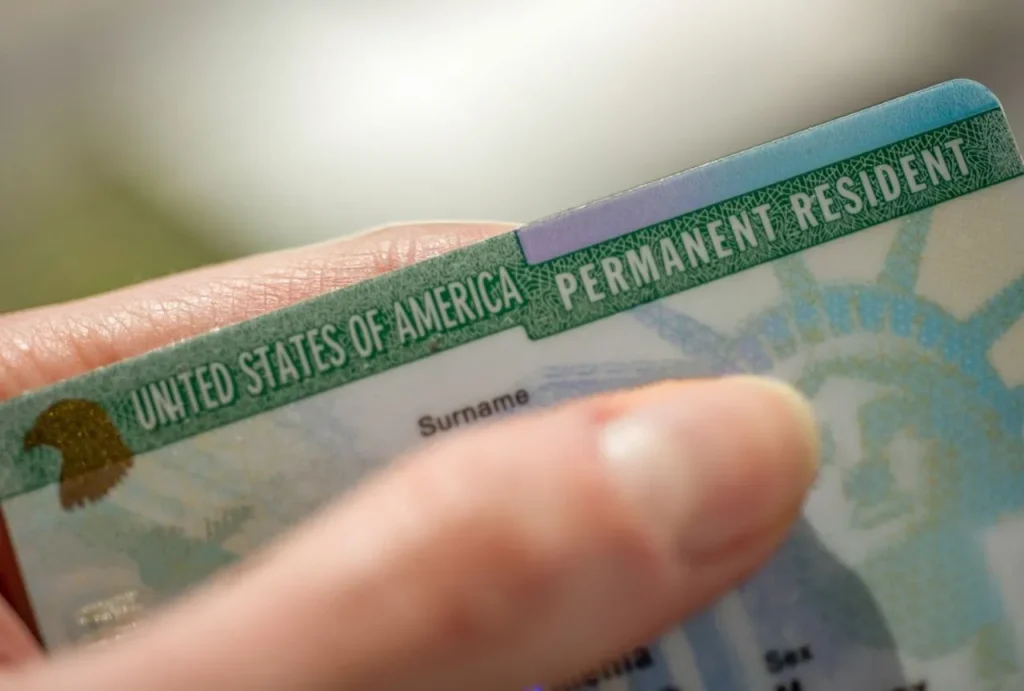
Why Green Card Applications Get Delayed
Immigration cases move through a complex system involving background checks, eligibility reviews, and document verification. Because so many moving parts are involved, even small errors can slow everything down.
Some of the most common reasons Green Card applications get delayed include:
- Missing documentation
- Incorrectly completed forms
- Expired paperwork
- Inconsistent information
- Requests for additional evidence (RFE)
Imagine submitting a college application but forgetting your transcript. Even if every other requirement is perfect, the admissions office cannot move forward without that missing piece.
The same principle applies to immigration. USCIS cannot approve your Green Card until every required document is submitted and verified.
Among these documents, the immigration medical exam form is one of the most commonly overlooked.
The Overlooked Document in Your Green Card Process
Many applicants assume the medical exam is just a routine step they can complete later if needed. While that assumption seems harmless, it often leads to significant delays.
The document responsible for this step is Form I-693 — Report of Medical Examination and Vaccination Record.
This form confirms that the applicant meets the health standards required by U.S. immigration law. It verifies that the individual does not carry certain communicable diseases and has received required vaccinations.
Because immigration focuses not only on legal eligibility but also on public health considerations, USCIS treats this document as essential.
Skipping it—even unintentionally—can pause your entire application.
What Is Form I-693?
Form I-693 is an official medical report completed by a USCIS-designated civil surgeon after performing your immigration medical exam.
This document contains several key pieces of information:
- Your vaccination history
- Results of tuberculosis screening
- Results of required blood tests
- A physical examination summary
- The doctor’s certification of your medical eligibility
Once the exam is completed, the civil surgeon places the signed form in a sealed envelope.
That envelope is extremely important.
USCIS requires the envelope to remain sealed because it confirms that the report has not been altered. If the envelope is opened—even accidentally—the document becomes invalid and must be redone.
Think of it like a tamper-proof security seal on a package.
Why This Form Matters So Much
At first glance, a medical form might seem like a small requirement compared to financial sponsorship documents or immigration petitions.
However, in the eyes of USCIS, it plays a critical role.
The U.S. government must ensure that incoming residents meet certain health standards. These standards help protect public health and reduce the spread of infectious diseases.
Without the medical exam results, USCIS simply cannot approve a Green Card.
This is why many applicants are surprised when they receive a Request for Evidence (RFE) asking for Form I-693. By the time they schedule the exam and send the document, their application timeline may already be extended by months.
The Immigration Medical Exam Requirement
The immigration medical exam is designed to ensure that applicants entering the United States do not have certain health conditions that would make them inadmissible.
These requirements exist for public health reasons and have been part of U.S. immigration law for decades.
During the exam, the civil surgeon evaluates whether the applicant has:
- Certain communicable diseases
- Missing vaccinations
- Physical or mental disorders associated with harmful behavior
- Drug abuse or addiction issues
While the exam may sound intimidating, most applicants pass without any issues.
For many people, it’s simply a routine checkup with additional documentation.
What Happens During the Medical Exam
The immigration medical exam is usually straightforward and typically takes less than an hour.
The appointment generally includes:
- Reviewing your medical history
- Conducting a physical examination
- Reviewing vaccination records
- Ordering required lab tests
During the visit, the doctor may ask questions about past illnesses, medications, and vaccination history. This information helps determine whether additional vaccines or tests are needed.
Many applicants compare the experience to a standard annual physical exam. The main difference is that the results must follow specific USCIS guidelines.
Tests and Vaccination Checks
Vaccination requirements play a significant role in the immigration medical exam.
The civil surgeon reviews your immunization records to confirm you meet U.S. vaccination standards.
Common vaccinations reviewed include:
- Measles, Mumps, and Rubella (MMR)
- Hepatitis B
- Tetanus and Diphtheria
- Varicella (chickenpox)
- Influenza (seasonal)
If certain vaccinations are missing, the doctor may administer them during the appointment.
Think of this step like updating your health records before enrolling in school. The goal is simply to ensure everyone meets the same basic health protections.

How Missing Form I-693 Causes Long Delays
When USCIS receives an application without the medical exam report, the agency cannot finalize the case.
Instead, officers must pause the application and request the missing document.
This interruption might seem minor, but it creates a ripple effect throughout the processing timeline.
Your application essentially goes from active review to temporary suspension.
Request for Evidence (RFE)
A Request for Evidence (RFE) is USCIS’s way of saying, “We need more information before we can continue.”
While receiving an RFE is common, it always adds time to your case.
Here’s what usually happens:
- USCIS sends an RFE notice by mail
- The applicant schedules a medical exam
- The clinic prepares Form I-693
- The applicant mails the sealed document back to USCIS
Each step takes time. Depending on scheduling availability and mailing delays, this process can easily add one to three months to your timeline.
Case Processing Slowdowns
Even after USCIS receives your medical form, your case does not immediately jump back to the front of the line.
Instead, it returns to the processing queue.
Imagine waiting in line at the airport security checkpoint. If you step out of line to fix a problem with your documents, you usually have to rejoin the line from the back.
Immigration processing works in a similar way.
This is why submitting all required documents from the beginning is so important.
Immigration Medical Exam Clinic Serving Applicants in Braeburn Glen
Applicants living near Braeburn Glen have access to specialized services that help simplify the medical exam process.
Immigration Medical Exam Clinic focuses specifically on immigration medical examinations and understands USCIS requirements in detail.
Instead of navigating the process alone, applicants can rely on experienced professionals who ensure:
- Form I-693 is completed accurately
- All vaccination requirements are reviewed
- Necessary lab tests are performed
- Documents are properly sealed for USCIS submission
Choosing a clinic familiar with immigration procedures can significantly reduce mistakes and delays.
When Should You Submit Your Medical Exam?
Timing the medical exam correctly can help prevent unnecessary complications.
Submitting the form too late often leads to RFEs, while submitting it too early could risk expiration if the case takes longer than expected.
Understanding this balance helps applicants avoid common pitfalls.
Before Filing vs. After Filing
There are two primary strategies for submitting Form I-693.
Submitting with your application
Pros
- Faster processing
- Lower risk of RFEs
- USCIS can review everything at once
Cons
- The form must remain valid while your case is processed
Submitting after USCIS requests it
Pros
- Less chance of expiration
Cons
- Higher likelihood of delays
Many immigration attorneys recommend submitting the medical exam with the initial Green Card application whenever possible.
Common Mistakes Applicants Make
Immigration paperwork is detail-oriented, and even minor errors can create complications.
Two of the most common mistakes involve doctor selection and document expiration.
Using Non-Authorized Doctors
Not every physician is allowed to perform immigration medical exams.
USCIS requires applicants to visit a civil surgeon authorized by the agency.
If the exam is conducted by a regular doctor who lacks this authorization, the results cannot be used.
This means the entire exam must be repeated, resulting in extra costs and delays.
Expired Medical Forms
Another common issue occurs when Form I-693 expires before USCIS finishes reviewing the case.
Although the form typically remains valid for up to two years, long processing times can sometimes create complications.
If USCIS determines the form is outdated, they may request a new medical exam.
That means starting the process all over again.
Tips to Avoid Green Card Delays
Preventing delays often comes down to preparation and organization.
Here are several practical tips that can help keep your Green Card application moving forward:
- Schedule your immigration medical exam early
- Use a USCIS-authorized civil surgeon
- Keep copies of all documentation
- Double-check application requirements before filing
- Submit the sealed medical envelope exactly as provided
- Respond to USCIS notices quickly
Think of immigration like planning a long journey. The more prepared you are before departure, the fewer obstacles you’ll face along the way.
Immigration Medical Exam Clinic Serving the Braeburn Glen Community and Beyond in Houston
Immigration Medical Exam Clinic is dedicated to serving the diverse needs of the local community of Houston, including individuals residing in neighborhoods like Braeburn Glen. With its convenient location near landmarks such as the Emanu El Memorial Park and major intersections like Mahoning Dr and Kennard Dr (coordinates: 29.68072479955935, -95.53521521974717), we offer green card medical exam services.
Get Green Card Medical Exam in Braeburn Glen Now
Call Us Now
Navigate from Braeburn Glen to Immigration Medical Exam Clinic Now
Conclusion
The Green Card process already requires patience, attention to detail, and careful documentation. Yet one of the most common causes of delays is a single overlooked form: Form I-693.
When the immigration medical exam report is missing or submitted incorrectly, USCIS cannot finalize the case. The result is often a Request for Evidence and months of additional waiting.
By completing your medical exam early and working with experienced providers like Immigration Medical Exam Clinic serving residents near Braeburn Glen, you can avoid many of these unnecessary delays.
Sometimes the smallest documents make the biggest difference. And in the immigration process, preparation is always your strongest advantage.
FAQs
1. What is the purpose of Form I-693?
Form I-693 documents the results of your immigration medical exam and confirms you meet the health standards required for U.S. immigration.
2. Who is authorized to perform immigration medical exams?
Only USCIS-approved civil surgeons are allowed to conduct immigration medical examinations and complete Form I-693.
3. How long does the immigration medical exam appointment take?
Most appointments last between 30 and 60 minutes, though additional lab tests may take longer to process.
4. Can my Green Card application be approved without Form I-693?
No. USCIS requires the medical exam report before approving any adjustment of status application.
5. Where can applicants near Braeburn Glen complete their immigration medical exam?
Applicants in the area can visit Immigration Medical Exam Clinic, which specializes in USCIS-compliant immigration medical examinations.